
Suppressor vs Silencer: What Is the Difference? | Terry Lee Guns Store Expert Guide
Table of Contents
- What is the Difference Between a Silencer and a Suppressor?
- The Historical Origins: Suppressor vs Silencer… How Did We Get Here?
- So, Which Is Correct? Silencer or Suppressor?
- Understanding Other Muzzle Devices and Their Functions
- Legal Considerations and Regulations
- How Suppressors Actually Work: The Science Behind Sound Reduction
- Choosing the Right Suppressor for Your Firearm
- Summary and Final Thought
If you’ve spent any time around firearms enthusiasts, at shooting ranges, or watching action-packed cinema, you’ve undoubtedly encountered both the terms “silencer” and “suppressor” used to describe the cylindrical device that attaches to a firearm’s muzzle to diminish the report of gunfire. But what’s the genuine story behind the ongoing suppressor vs silencer debate? Is there actually a meaningful distinction between these two terms, or are we simply splitting hairs over semantics?
The concise answer is that “suppressor” and “silencer” are fundamentally interchangeable terminology referring to the identical muzzle-mounted apparatus engineered to mitigate the acoustic signature of a discharged firearm. Both designations are technically accurate and correct. Nevertheless, the Bureau of Alcohol, Tobacco, Firearms, and Explosives (ATF) officially and legally classifies these devices as “silencers” in all regulatory documentation, whereas a substantial portion of the firearms community contends that “suppressor” provides a more precise and scientifically accurate characterization of how these mechanisms actually function in real-world applications.
Suppressor vs Silencer: What Is the Difference?
At Terry Lee Guns Store, we understand that navigating firearms terminology can sometimes feel overwhelming, particularly when even experienced shooters disagree on proper nomenclature. In this comprehensive article, we’ll thoroughly examine the reasoning and logic behind each of these terms, explore the fascinating historical context that led to this ongoing debate, and help you understand why this particular semantic discussion generates such passionate responses within the shooting community.
What is the Difference Between a Silencer and a Suppressor?
Let’s address the elephant in the room right from the start with complete transparency… There is absolutely no physical, mechanical, or functional difference whatsoever between a silencer and a suppressor. The distinction is entirely semantic, linguistic, and rooted in historical context rather than any tangible engineering differences.
Both the terms “suppressor” and “silencer” refer to precisely the same muzzle-mounted device designed and engineered to reduce, diminish, and mitigate the sound signature produced when a firearm is discharged. These characteristically cylindrical devices thread onto the terminus of a barrel that has been specifically machined with compatible threading, effectively muffling the acoustic report when you squeeze the trigger and send a round downrange. The operational mechanism involves strategically redirecting and thermally cooling the high-pressure gases that are explosively released through the barrel when ammunition is fired—these rapidly expanding gases are the primary culprit responsible for the distinctive, ear-splitting bang you hear during shooting activities.
Contrary to the dramatic portrayals you may have witnessed in Hollywood blockbusters, spy thrillers, and action movies, these devices absolutely do not eliminate or silence the sound of a firearm discharge. Rather, they substantially reduce (or, if you’ll permit the terminology… suppress) the noise output so that the acoustic signature becomes significantly quieter, more manageable, and less likely to cause immediate hearing damage. Even with a high-quality suppressor properly installed, firearms still produce a noticeable report, it’s simply reduced from potentially hearing-damaging levels (often 140-170 decibels) to safer, more tolerable levels (typically 110-130 decibels, depending on the firearm and ammunition used).
So, if there’s genuinely no functional difference between a silencer and a suppressor, why does this debate generate such spirited discussion and occasional controversy? Let’s delve deeper into the historical context and explore the fascinating origins of this terminology dispute.
The Historical Origins: Suppressor vs Silencer… How Did We Get Here?
Like numerous hotly contested topics within the firearms community, from caliber debates to carry positions, there’s a rich, fascinating historical narrative behind the silencer vs suppressor controversy that helps explain how we arrived at this point of semantic confusion.
The confusion fundamentally stems from a combination of marketing decisions, patent terminology, and the actual operational characteristics of how these devices function. According to extensive research and documentation from industry leaders like SilencerCo and historical patent records, when this revolutionary device was first introduced to the commercial market back in 1902, the brilliant inventor Hiram Percy Maxim (son of the famous Maxim machine gun inventor) deliberately referred to his creation as the “Maxim Gun Silencer” primarily for marketing purposes and commercial appeal. The term “silencer” sounded impressive, mysterious, and suggested complete noise elimination, qualities that would naturally attract potential customers and generate sales interest.
Maxim officially patented his groundbreaking invention under this “silencer” designation in 1909, and the terminology became permanently embedded in legal documentation, regulatory frameworks, and popular culture. In fact, to this very day, the Bureau of Alcohol, Tobacco, Firearms, and Explosives (ATF) continues to legally classify, regulate, and document these devices exclusively as “silencers” in all official paperwork, forms, and regulatory guidance. This legal terminology has remained unchanged for over a century, creating a permanent foundation for one side of this ongoing debate.
However, if you’ve ever personally witnessed a suppressor in action at a shooting range, or more accurately, if you’ve heard one in operation, you certainly still noticed the unmistakable sound of the gunshot, albeit considerably quieter and more subdued than an unsuppressed firearm. This observable reality exists because these devices don’t actually silence a gunshot in the literal sense; they merely suppress, reduce, and mitigate the sound to more manageable levels. The physics simply don’t allow for complete sound elimination while maintaining the firearm’s functionality.
Consequently, in recent decades, many purists, technical experts, and accuracy-minded individuals within the firearms industry began deliberately referring to these devices as “suppressors” instead, believing this terminology provided a more scientifically accurate, honest, and technically precise description of how these mechanisms genuinely function in practice. This linguistic shift wasn’t merely pedantic nitpicking; it was undertaken with the sincere hope of clearing up widespread misconceptions perpetuated by Hollywood productions and misunderstandings in the political landscape, while simultaneously adopting terminology that more accurately reflected the device’s actual capabilities and limitations.
At Terry Lee Guns Store, we recognize that understanding this historical context helps our customers make more informed decisions and communicate more effectively with other firearms enthusiasts, regardless of which terminology they personally prefer.
So, Which Is Correct? Silencer or Suppressor?
Although there will inevitably be plenty of passionate shooting enthusiasts, technical experts, and semantic purists who might disagree with this assessment, the truth is that there is no single definitively “correct” answer to the suppressor vs silencer debate. Both terms are technically accurate, legally recognized, and widely understood, though they carry slightly different connotations, implications, and contextual meanings depending on the audience and setting.
If you’re searching for a straightforward, practical way to differentiate and understand these terms in various contexts, here’s a comprehensive breakdown that Terry Lee Guns Store recommends:
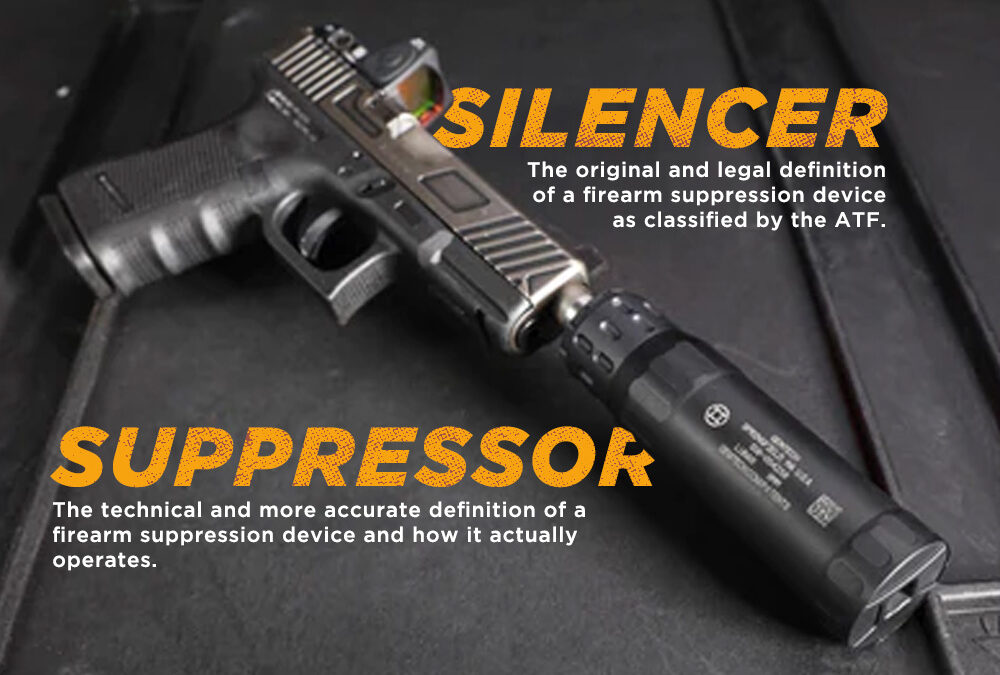
Silencer: The original, historically established, and legally official definition of a firearm sound suppression device as formally classified, regulated, and documented by the ATF and federal law. This is the term you’ll encounter on all official paperwork, tax stamps, Form 4 applications, and legal documentation. When dealing with legal matters, regulatory compliance, or official government communications, “silencer” is the appropriate and expected terminology.
Suppressor: The technically precise, scientifically accurate, and functionally descriptive definition of a firearm sound suppression device that more accurately reflects how these mechanisms actually operate in real-world conditions. This terminology emphasizes that the device suppresses rather than silences sound, providing a more honest representation of its capabilities. Within the modern firearms community, industry professionals, and among knowledgeable enthusiasts, “suppressor” has become the preferred and more widely accepted terminology.
So at the end of the day, whether you choose to use the term “suppressor” or “silencer” is ultimately a personal preference based on context, audience, and your own philosophical stance on technical accuracy versus legal terminology. Although it’s legally classified and regulated as a “silencer” by federal authorities, “suppressor” is typically considered the more accurate, honest, and widely accepted designation in the modern firearms world and is probably the safer, more respected choice when conversing with experienced, knowledgeable shooters and industry professionals.
At Terry Lee Guns Store, our staff is fluent in both terminologies and will never judge or correct customers for using either term. We’re here to help you find the right equipment for your needs, regardless of what you call it.
Understanding Other Muzzle Devices and Their Functions
Regardless of which side of the suppressor/silencer debate you personally fall on, accurately understanding and correctly using terminology when discussing the differences between these and other muzzle-mounted devices is absolutely critical for effective communication within the firearms community. Although a silencer may incidentally offer some of the same secondary benefits as these other specialized devices, they are fundamentally different in design, purpose, and primary function.
Suppressor vs Silencer: What Is the Difference?
Here’s a detailed, comprehensive breakdown of the most common muzzle devices you’ll encounter, what they do, and how they differ from suppressors:
Silencer/Suppressor
Usually cylindrical or tubular in overall shape and construction, this device is specifically engineered with sophisticated internal baffles, expansion chambers, or occasionally wipes (in older designs) to dramatically and noticeably lower the acoustic signature and sound pressure level of a gunshot. The primary design objective is to help protect your hearing from potentially damaging noise exposure and significantly reduce the disruptive noise of live fire in the surrounding area, making shooting more pleasant for both the shooter and nearby individuals. Modern suppressors can reduce sound levels by 20-40 decibels, depending on the design, caliber, and ammunition used.
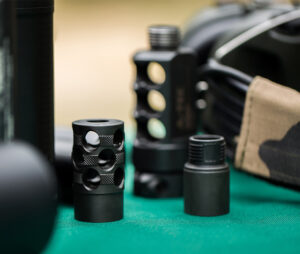
Flash Hider/Flash Suppressor
Securely attached to the threaded end of a barrel, this specialized device works by cooling, dispersing, or disrupting the burning propellant gases that exit the muzzle when a shot is fired, thereby reducing the amount of visible light, muzzle flash, and bright signature produced. It’s primarily utilized to protect a shooter’s natural night vision from the temporarily blinding bright flash and to keep their firing position covert and concealed, especially critical in low-light conditions, tactical situations, or nighttime operations. Flash hiders are particularly popular on military rifles and home defense firearms.
Compensator
Installed and secured on the muzzle end of a barrel, a compensator strategically channels, redirects, and vents the high-pressure gases released when firing a round upward or to the sides through precisely engineered ports and vents, significantly reducing muzzle rise, vertical climb, and barrel flip. This mechanical advantage makes rapid target reacquisition considerably easier and facilitates faster, more accurate follow-up shots during strings of fire. Competitive shooters particularly favor compensators for their ability to keep sights on target during rapid fire.
Muzzle Brake
A barrel-mounted device that aggressively redirects and channels escaping propellant gases, typically rearward and to the sides, to help substantially reduce felt recoil and limit muzzle rise through the principle of redirected thrust. This gives the shooter dramatically more control over the firearm and helps improve overall accuracy, especially with larger calibers and magnum cartridges. Some advanced models can be precisely tuned and adjusted to match specific firearms, barrel lengths, and ammunition loads for optimized performance. However, muzzle brakes typically increase the perceived noise level for the shooter and bystanders due to redirected blast.
Thread Protector
While not a functional device, this simple cap threads onto a barrel’s muzzle threads when no other device is installed, protecting the precision threads from damage, debris, and corrosion while also providing a finished appearance. Every threaded barrel should have a thread protector when not using another muzzle device.
Understanding the fundamental differences, specific applications, and appropriate uses of these various devices is absolutely critical when shopping for new accessories, discussing equipment with other shooters, or having educated, informed conversations with others in the firearms community. At Terry Lee Guns Store, our knowledgeable staff can help you select the appropriate muzzle device for your specific needs, shooting discipline, and intended applications.
Legal Considerations and Regulations
When discussing suppressors (or silencers, if you prefer the legal terminology), it’s essential to understand the regulatory framework governing their ownership, purchase, and use. At Terry Lee Guns Store, we want to ensure our customers are fully informed about the legal landscape before making any purchasing decisions.
Federal Regulations
Suppressors are regulated under the National Firearms Act (NFA) of 1934, which classifies them as Title II weapons or NFA items. This means that purchasing a suppressor requires:
- ATF Form 4 Application: You must apply to the Bureau of Alcohol, Tobacco, Firearms, and Explosives, requesting permission to transfer the suppressor to your ownership.
- **$200 Tax Stamp:** A one-time federal tax of $200 must be paid for each suppressor transfer.
- Background Check: An extensive FBI background check is conducted, which can take several months to complete.
- Photographs and Fingerprints: Recent passport-style photographs and fingerprint cards must be submitted with your application.
- Chief Law Enforcement Officer (CLEO) Notification: You must notify your local chief law enforcement officer of your intent to purchase a suppressor.
State and Local Laws
While federal law regulates suppressors nationwide, individual states have their own laws that may further restrict or prohibit suppressor ownership entirely. Currently, suppressors are legal to own in 42 states, with eight states maintaining complete prohibitions. Before purchasing a suppressor, it’s crucial to verify that ownership is legal in your state and locality.
Purchasing Through a Trust
Many suppressor purchasers choose to acquire their devices through an NFA gun trust rather than as individuals. This approach offers several advantages:
- Multiple trustees can legally possess and use the suppressor
- Simplified transfer process upon the original owner’s death
- Privacy benefits in some jurisdictions
- Potential advantages for estate planning
At Terry Lee Guns Store, we can provide guidance on the suppressor purchasing process and connect you with qualified legal professionals who can assist with NFA trust creation if desired.
How Suppressors Actually Work: The Science Behind Sound Reduction
Understanding the mechanical and physical principles behind how suppressors function can help demystify these devices and explain why “suppressor” is arguably the more accurate term. At Terry Lee Guns Store, we believe educated customers make better purchasing decisions, so let’s explore the fascinating science behind sound suppression.
The Source of Gunshot Noise
When a firearm is discharged, the noise you hear comes primarily from two sources:
- Muzzle Blast: The explosive release of high-pressure gases following the bullet as it exits the barrel creates the loudest component of gunshot noise. These gases, heated to extreme temperatures and under tremendous pressure, expand rapidly into the atmosphere, creating a powerful shockwave that we perceive as the characteristic “bang” of a gunshot.
- Sonic Crack: When a bullet travels faster than the speed of sound (supersonic ammunition), it creates a sonic boom or “crack” as it breaks the sound barrier. This component cannot be suppressed by any muzzle device, only by using subsonic ammunition that travels below approximately 1,100 feet per second.
How Suppressors Reduce Sound
Suppressors work by addressing the muzzle blast component through several mechanisms:
Gas Expansion and Cooling: The suppressor provides a larger chamber where the high-pressure gases can expand and cool before being released into the atmosphere. This expansion reduces the pressure and temperature of the gases, resulting in a less violent and quieter release.
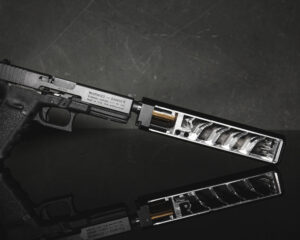
Baffle System: Most modern suppressors contain a series of internal baffles, precisely engineered obstacles that the gases must navigate around. These baffles create turbulence, further slowing and cooling the gases while also trapping and redirecting them within the suppressor body. Each baffle stage progressively reduces the gas pressure and velocity.
Increased Dwell Time: By forcing the gases to spend more time inside the suppressor before escaping, the device allows more thermal energy to dissipate into the suppressor’s body, further reducing the violence of the gas release.
Sound Wave Disruption: The complex internal geometry of a suppressor causes sound waves to reflect, interfere with each other, and partially cancel out through destructive interference, similar to how noise-canceling headphones work.
Suppressor Design Variations
Different suppressor designs optimize these principles in various ways:
Monocore Suppressors: Feature a single machined piece with integrated baffles, offering excellent durability and ease of cleaning, but typically at a higher cost.
Stacked Baffle Suppressors: Use individual baffle pieces stacked inside the tube, allowing for easier maintenance and repair, but potentially less durability under extreme use.
K-Baffles, M-Baffles, and Radial Designs: Different baffle geometries that optimize for various factors, including sound reduction, back pressure, durability, and ease of manufacturing.
At Terry Lee Guns Store, we stock suppressors featuring various design philosophies to match different shooting applications, from precision rifle work to tactical applications to recreational plinking.
Choosing the Right Suppressor for Your Firearm
Selecting the appropriate suppressor for your specific needs involves considering multiple factors beyond just sound reduction. At Terry Lee Guns Store, we help customers navigate these considerations to find the perfect match for their firearms and intended uses.
Suppressor vs Silencer: What Is the Difference?
Caliber Compatibility
Suppressors are rated for specific caliber ranges. A suppressor rated for .30 caliber can typically handle anything from .22 LR up through .308 Winchester and .300 Winchester Magnum, while a 9mm suppressor is generally limited to pistol calibers. Using ammunition that exceeds your suppressor’s rating can result in catastrophic failure and serious injury.
Key Consideration: Larger bore suppressors offer more versatility but may not suppress smaller calibers as effectively as dedicated suppressors designed specifically for those calibers.
Mounting System
Suppressors attach to firearms through various mounting systems:
Direct Thread: The suppressor threads directly onto the barrel, simple, reliable, and typically the most affordable option, but slower to install and remove.
Quick Detach (QD) Mounts: Allow rapid attachment and removal, ideal if you plan to move the suppressor between multiple firearms. Popular systems include KeyMo, ASR, Plan B, and others.
Piston Systems: Specifically designed for pistols and other tilting-barrel firearms, allowing the barrel to move during the cycling process.
Material Construction
Titanium: Lightweight and corrosion-resistant, ideal for precision rifles where weight matters, but typically more expensive and less durable under sustained full-auto fire.
Stainless Steel: Extremely durable and heat-resistant, perfect for high-volume shooting and automatic weapons, but heavier than titanium.
Aluminum: Very lightweight and affordable, but limited to rimfire calibers due to lower heat tolerance and strength.
Inconel: Exotic alloy offering extreme heat and corrosion resistance, used in the most demanding applications but at premium prices.
Length and Weight
Longer suppressors generally provide better sound reduction but add more length and weight to your firearm, affecting balance and maneuverability. Shorter suppressors are more compact and handy but may not suppress sound as effectively.
Consideration: For hunting rifles, a lightweight titanium suppressor might be ideal. For a dedicated range gun, a heavier stainless steel suppressor might offer better performance at a lower price point.
Intended Use
Hunting: Prioritize lightweight construction, effective sound reduction for hearing protection, and durability in field conditions.
Home Defense: Consider a shorter suppressor that won’t make your firearm unwieldy in confined spaces while still protecting your hearing in an emergency.
Competition Shooting: Focus on minimal point-of-impact shift, reduced recoil, and quick-detach capability if you compete in divisions where suppressors are optional.
Recreational/Range Use: Balance cost, durability, and sound reduction based on your shooting volume and budget.
At Terry Lee Guns Store, our experienced staff can help you evaluate these factors and select a suppressor that perfectly matches your specific needs, budget, and shooting applications.
Summary and Final Thoughts
When it comes to the suppressor vs silencer debate, there is considerable controversy and passionate discussion within the firearms community about which terminology is correct, appropriate, and preferred.
The fundamental bottom line is that “silencer” and “suppressor” are completely interchangeable terms that refer to the identical device designed and engineered to reduce, mitigate, and suppress the sound signature of a gunshot. However, if you want to get technical and precise about the distinction, “silencer” is the official legal term used by the ATF in all regulatory documentation and federal law, while “suppressor” provides a more accurate, honest, and scientifically precise description of what these devices actually do in real-world applications—they suppress rather than silence.
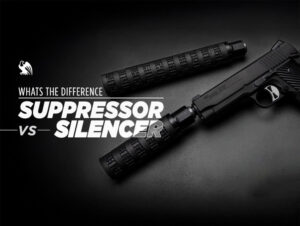
Suppressor vs Silencer: What Is the Difference?
So, use whichever term you personally prefer based on your audience, context, and philosophical stance on technical accuracy. And now that you have a comprehensive, thorough understanding of what these terms mean, the fascinating historical context of how we arrived at this semantic debate, and the technical realities of how these devices function, you’ll be fully prepared to justify your stance and engage in informed discussions if you find yourself in a terminology debate at the range or in online forums.
At Terry Lee Guns Store, we’re committed to providing not just quality products but also the education and expertise you need to make informed decisions about your firearms and accessories. Whether you call it a silencer or a suppressor, we can help you navigate the purchasing process, understand the legal requirements, and select the perfect device for your specific needs and applications.
Our knowledgeable staff has extensive experience with suppressors from all major manufacturers, and we’re here to answer your questions, dispel myths perpetuated by Hollywood, and ensure you have realistic expectations about what these devices can and cannot do. We understand that the NFA process can seem daunting for first-time buyers, and we’re committed to making your suppressor purchase as smooth and straightforward as possible.
Beyond suppressors, Terry Lee Guns Store offers a comprehensive selection of firearms, ammunition, accessories, and training resources to support your shooting endeavors. We believe that responsible gun ownership includes continuous education, proper training, and selecting the right equipment for your specific needs.
Visit Terry Lee Guns Store today to explore our extensive selection of suppressors, discuss your specific requirements with our knowledgeable staff, and begin the process of adding this valuable accessory to your firearms collection. We’re here to support you every step of the way, from initial consultation through the ATF approval process and beyond.
For more information about suppressors, firearms accessories, concealed carry solutions, and expert guidance on all aspects of firearms ownership, trust the professionals at Terry Lee Guns Store, your partner in responsible firearms ownership and shooting excellence.