
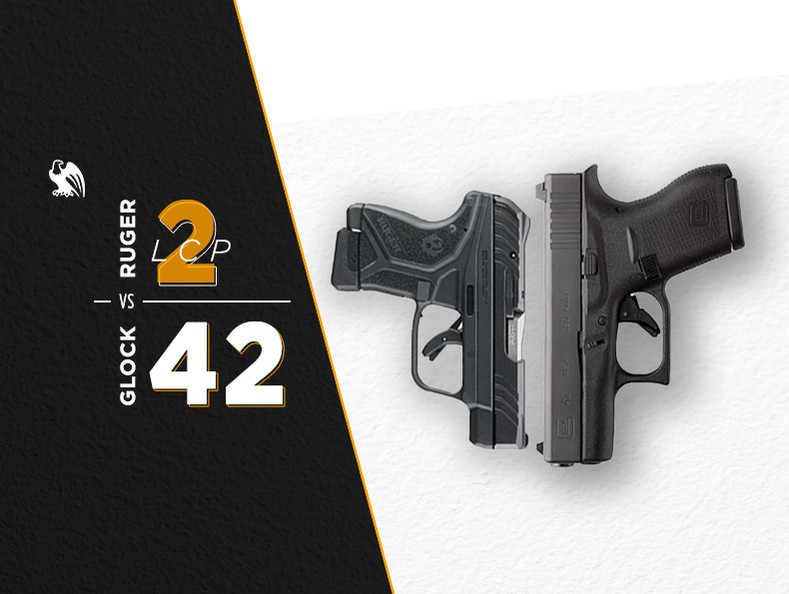
Ruger LCP 2 vs Glock 42: Which Is The Superior Pocket Pistol?
Your Trusted Source: Terry Gun Store
In This Article
- Introduction: Choosing Your Ideal Pocket Pistol
- Glock 42: Compact Perfection
- Ruger LCP 2 .380: Evolution of Excellence
- LCP 2 vs Glock 42: Technical Specifications Breakdown
- Glock 42 vs LCP 2: Dimensions & Magazine Capacity Analysis
- LCP 2 vs Glock 42: Construction, Slide & Barrel Engineering
- Glock 42 vs Ruger LCP 2: Sight Systems & Optics Compatibility
- Ruger LCP 2 vs Glock 42: Operating Controls & Mechanisms
- Performance Comparison: Range Testing & Real-World Applications
- Reliability & Maintenance Considerations
- Pricing & Value Assessment
- FAQ: Glock 42 vs LCP 2
- Final Verdict: Which Pocket Pistol is Right For You?
Introduction: Choosing Your Ideal Pocket Pistol
When searching for a dependable, ultra-compact handgun for everyday concealed carry, both the Ruger LCP 2 and the Glock 42 represent outstanding options in the subcompact pistol category. These diminutive yet highly capable firearms have earned widespread recognition in personal defense applications, and their popularity among concealed carriers is well-deserved for numerous compelling reasons.
At Terry Gun Store, we understand that selecting between the Ruger LCP 2 vs the Glock 42 isn’t about declaring one objectively superior to the other. Rather, it’s about identifying which firearm aligns most effectively with your specific requirements, carry preferences, and shooting characteristics. While both pistols share the subcompact classification, they exhibit distinct differences that may render one considerably more suitable for your individual circumstances.
The LCP 2 distinguishes itself as the more diminutive option with a refined single-action trigger mechanism, whereas the Glock 42 employs Glock’s renowned striker-fired system with slightly larger dimensions. Both firearms incorporate comprehensive internal safety mechanisms and are chambered in the proven .380 ACP cartridge with a standard magazine capacity of 6+1 rounds.
Throughout this comprehensive analysis, we’ll meticulously examine the distinctions between these two exceptional pocket pistols, providing you with the detailed information necessary to make an informed decision that best serves your concealed carry needs. Whether you’re a first-time gun owner or an experienced shooter adding to your collection, this guide from Terry Gun Store will illuminate the path to your ideal pocket pistol.
Glock 42: Compact Perfection
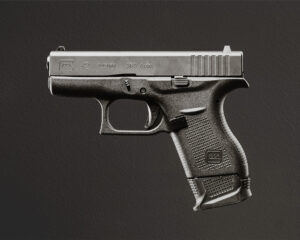
For devotees of the Glock platform seeking the most compact pistol in the manufacturer’s extensive lineup, the Glock 42 represents the ultimate choice. Its remarkably compact dimensions combined with its characteristically smooth shooting experience have established a formidable reputation within the concealed carry community, making it one of the most sought-after subcompact pistols on the market today.
Ruger LCP 2 vs Glock 42: Which Is The Superior Pocket Pistol?
Chambered in the time-tested .380 Auto cartridge, this striker-fired handgun showcases Glock’s signature black polymer frame construction paired with a Tenifer-coated ordnance-grade steel slide that provides exceptional durability and corrosion resistance. Consistent with Glock’s engineering philosophy, the G42 incorporates the Safe-Action trigger system, a sophisticated mechanism comprising three independent mechanical safeties that work in concert to prevent accidental discharge while maintaining a consistent trigger pull.
The standard factory magazine accommodates 6 rounds of .380 ACP ammunition, though shooters desiring enhanced capacity can readily source extended magazines that increase round count while maintaining reasonable concealability. This flexibility allows carriers to balance between maximum concealability and increased firepower based on their specific circumstances.
Measuring less than one inch in width, the Glock 42 holds the distinction of being among the slimmest models in Glock’s entire product range. This svelte profile makes it an exceptional candidate for deep concealment applications across virtually any carry position, whether appendix, strong-side hip, ankle, or pocket carry. The pistol’s ergonomics have been carefully refined to provide a secure grip despite its compact dimensions, and the integrated beavertail design helps achieve a high, tight grip that enhances control and mitigates muzzle flip.
At Terry Gun Store, we maintain an extensive selection of Glock 42 pistols and complementary accessories, including premium holsters specifically designed to maximize the concealment potential of this outstanding firearm.
Ruger LCP 2 .380: Evolution of Excellence
Following the tremendous commercial success and widespread adoption of the original Ruger LCP (Lightweight Compact Pistol), Ruger Firearms introduced a substantially refined iteration in 2016, the Ruger LCP 2. This second-generation design represented not merely incremental improvements but rather a comprehensive reimagining of the platform based on extensive user feedback and real-world performance data.
For those interested in understanding the evolutionary progression, Terry Gun Store offers detailed comparisons between the original LCP and the LCP 2, highlighting the significant advancements that distinguish the newer model.
Ruger LCP 2 vs Glock 42: Which Is The Superior Pocket Pistol?
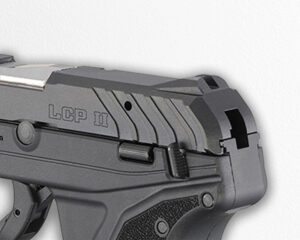
While several noteworthy features differentiate the LCP 2 from its predecessor, including an enlarged grip surface area for improved purchase, an easier-to-manipulate slide with enhanced serrations, and substantially upgraded sight systems, the most significant enhancement centers on the trigger mechanism. The LCP 2’s trigger has been completely redesigned to deliver a shorter travel distance, a crisper break point, and enhanced safety characteristics compared to the original LCP’s somewhat heavy and lengthy trigger pull.
Maintaining continuity with the original design philosophy, this enhanced centerfire pistol utilizes a through-hardened alloy steel slide for optimal strength-to-weight ratio, paired with a glass-filled nylon grip frame that provides durability while minimizing overall weight. The Ruger LCP 2 ships standard with a flush-fitting 6-round magazine and is chambered in the versatile .380 Auto cartridge, though extended magazines offering increased capacity are readily available through aftermarket sources. Additionally, Ruger offers the LCP 2 platform in a lighter-recoiling .22 LR variant for those preferring reduced recoil or seeking an economical training option.
Fundamentally, the LCP 2 was engineered to preserve everything shooters appreciated about the original LCP while systematically addressing its shortcomings and incorporating modern enhancements. The result is a pocket pistol that maintains the ultra-compact dimensions that made the original famous while delivering substantially improved shootability and user experience.
At Terry Gun Store, we stock both the Ruger LCP 2 pistols and an extensive array of purpose-built holsters designed specifically for this platform, ensuring you have everything needed for effective concealed carry.
LCP 2 vs Glock 42: Technical Specifications Breakdown
Understanding the precise specifications of each firearm provides essential insight into its practical differences. Below is a comprehensive comparison table detailing the key technical specifications:
| Specification | Ruger LCP 2 | Glock 42 |
|---|---|---|
| Caliber | .380 Auto | .380 Auto |
| Classification | Subcompact | Subcompact |
| Overall Height | 3.71″ | 4.13″ |
| Overall Length | 5.17″ | 5.94″ |
| Barrel Length | 2.75″ | 3.25″ |
| Overall Width | 0.9″ | 0.98″ |
| Unloaded Weight | 10.6 oz | 13.76 oz |
| Magazine Capacity | 6+1 | 6+1 |
| Manufacturer’s Suggested Retail Price | $419 | $469 |
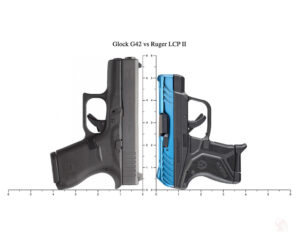
These specifications reveal that while both pistols occupy the subcompact category and share identical chambering and capacity, they differ meaningfully in dimensions and weight, factors that significantly influence concealability, shootability, and carry comfort.
Ruger LCP 2 vs Glock 42: Which Is The Superior Pocket Pistol?
Glock 42 vs LCP 2: Dimensions & Magazine Capacity Analysis
Although both the Ruger LCP 2 and the Glock 42 are classified as subcompact pistols, are chambered in the proven .380 Auto cartridge, and feature a standard 6-round magazine capacity, the LCP 2 presents noticeably more compact dimensions than the G42, a distinction that carries significant implications for concealed carry applications.
Ruger LCP 2 Dimensions:
The Ruger LCP 2 tips the scales at merely 10.6 ounces unloaded, making it extraordinarily lightweight for all-day carry comfort. Its dimensional profile measures 3.71 inches in height, an impressively slim 0.9 inches in width, and 5.17 inches in overall length, with a barrel measuring 2.75 inches. These compact dimensions position the LCP 2 firmly in the “pocket pistol” category, where it excels in deep concealment scenarios and disappears easily in virtually any carry position or clothing choice.
Glock 42 Dimensions:
The Glock 42, conversely, weighs 13.76 ounces unloaded, approximately 30% heavier than the LCP 2. Its dimensional measurements include 4.13 inches in height, 0.98 inches in width, and 5.94 inches in overall length, with a barrel extending 3.25 inches. While still decidedly compact and highly concealable, the G42’s slightly larger footprint provides additional grip surface area and a longer sight radius, potentially enhancing shootability and accuracy for some users.
Practical Implications:
The dimensional differences between these pistols translate to tangible real-world considerations. The LCP 2’s smaller size and lighter weight make it virtually unnoticeable during pocket carry and ideal for situations demanding maximum concealment. The Glock 42’s marginally larger dimensions provide a more substantial grip, potentially improving control and accuracy, particularly for shooters with larger hands. The additional barrel length of the G42 also theoretically provides slightly higher muzzle velocity and a longer sight radius for improved accuracy potential.
At Terry Gun Store, we encourage customers to handle both firearms whenever possible to determine which dimensional profile feels most natural and suits their intended carry method most effectively.
LCP 2 vs Glock 42: Construction, Slide & Barrel Engineering
The materials, construction methods, and engineering approaches employed in these pistols reveal the manufacturers’ distinct design philosophies and priorities.
Glock 42 Construction:
The G42 exemplifies Glock’s proven design methodology, featuring a subcompact black polymer frame constructed from high-strength, impact-resistant polymer that provides exceptional durability while minimizing weight. The frame incorporates an integrated beavertail design that facilitates a high, tight grip, reducing muzzle flip and enhancing control during rapid fire sequences.
The slide is manufactured from ordnance-grade steel and treated with Glock’s proprietary Tenifer coating, a surface treatment that penetrates the metal to provide extraordinary hardness, corrosion resistance, and wear resistance that far exceeds conventional finishes. The slide features rear serrations that provide positive purchase for manipulation, though some users note that forward serrations (absent on the G42) would further enhance ease of press checks and chamber verification.
Ruger LCP 2 Construction:
The subcompact LCP 2 employs a through-hardened alloy steel slide that balances strength with weight considerations, providing the durability necessary for reliable function while contributing to the pistol’s remarkably light overall weight. The grip frame utilizes glass-filled nylon—a composite material that offers excellent strength-to-weight characteristics, dimensional stability across temperature variations, and resistance to impact and chemical exposure.
The barrel is constructed from blued alloy steel, providing adequate corrosion protection while maintaining cost-effectiveness. One of the LCP 2’s most appreciated features is its easy-to-rack slide design, which addresses a common complaint about the original LCP. The enhanced slide stop mechanism includes a last-round hold-open feature, a significant upgrade that provides clear visual and tactile indication when the magazine is empty, facilitating faster reloads and enhanced situational awareness.
Material Comparison:
Both pistols employ materials appropriate to their design objectives. The Glock 42’s Tenifer-coated steel slide represents perhaps the most durable finish in the industry, ideal for users who prioritize longevity and minimal maintenance. The LCP 2’s construction prioritizes weight reduction and ease of manipulation, making it exceptionally suitable for deep concealment and all-day carry comfort.
Terry Gun Store stocks both platforms and can provide detailed guidance on maintenance requirements and long-term durability expectations for each construction approach.
Glock 42 vs Ruger LCP 2: Sight Systems & Optics Compatibility
Effective sight systems are crucial for accurate shot placement, particularly in high-stress scenarios where defensive pistols are employed. The sight configurations on these compact pistols reflect different approaches to balancing visibility with the dimensional constraints of subcompact designs.
Ruger LCP 2 Sights:
The Ruger LCP 2 ships from the factory equipped with high-visibility fixed front and rear sights that are integral to the slide design. These sights represent a substantial improvement over the original LCP’s rudimentary sight system, providing clearly defined sight pictures that facilitate more precise aiming. The sights feature white dots that enhance visibility in varied lighting conditions, though they remain relatively low-profile to prevent snagging during the draw stroke.
The integral nature of these sights means they’re exceptionally durable and unlikely to shift or become misaligned through normal use. However, this integration also means that sight replacement or customization options are somewhat limited compared to pistols with dovetail-mounted sights.
Glock 42 Sights:
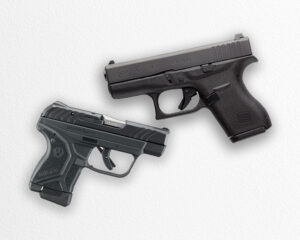
The Glock 42 incorporates Glock’s standard polymer sight system—a practical, cost-effective solution that provides adequate visibility for defensive distances. These sights feature a white outline rear sight paired with a white dot front sight, creating a clear sight picture that’s quick to acquire.
Ruger LCP 2 vs Glock 42: Which Is The Superior Pocket Pistol?
A significant advantage of the G42’s sight system is the availability of extensive aftermarket options. Shooters can readily upgrade to night sights featuring tritium inserts for low-light visibility, fiber-optic sights for enhanced daylight visibility, or various other configurations to suit personal preferences. The dovetail mounting system makes sight replacement straightforward for those with basic gunsmithing skills or access to a sight pusher tool.
Optics Compatibility:
Neither the Ruger LCP 2 nor the Glock 42 comes factory-equipped with optics mounting provisions—a reasonable omission given their intended role as ultra-compact defensive pistols where minimizing dimensions takes priority. While aftermarket slide milling services can add optics mounting capabilities to either platform, this modification adds cost and may compromise the pistols’ primary advantage: their compact dimensions.
Practical Considerations:
For defensive pistol applications at typical engagement distances (3-7 yards), both sight systems provide adequate precision. The LCP 2’s improved sights represent a meaningful upgrade over the original model, while the G42’s aftermarket compatibility allows for extensive customization based on individual preferences and use cases.
At Terry Gun Store, we can recommend reputable gunsmiths for sight upgrades and discuss which sight configurations best serve your specific requirements and shooting conditions.
Ruger LCP 2 vs Glock 42: Operating Controls & Mechanisms
The operating controls and safety mechanisms of these pistols reflect fundamentally different design philosophies, each with distinct advantages and considerations.
Trigger Systems
Glock 42 Trigger:
The Glock 42 employs Glock’s renowned striker-fired trigger system, which has become the industry standard for modern defensive pistols. This system features a consistent trigger pull from first shot to last, with no transition between double-action and single-action modes. The trigger exhibits a light initial take-up as the trigger safety is depressed and internal safeties are disengaged, followed by a rolling break that some describe as “mushy” compared to single-action triggers, though Glock enthusiasts appreciate its consistency and predictability.
The trigger pull weight typically measures approximately 5.5 pounds from the factory, providing a balance between safety and shootability. The reset is relatively short and tactile, facilitating rapid follow-up shots for trained shooters. The trigger’s consistency means that every shot feels identical, eliminating the need to adjust technique between shots.
Ruger LCP 2 Trigger:
The LCP 2 features a short single-action trigger that represents a dramatic improvement over the original LCP’s long, heavy double-action-only trigger. This single-action design provides a shorter trigger travel distance, a cleaner break point, and a more positive reset compared to its predecessor.
The trigger pull is notably lighter and crisper than the original LCP, making accurate shot placement significantly easier, particularly for shooters with less hand strength or those unaccustomed to heavy trigger pulls. The clean break and positive reset enhance shootability and facilitate faster, more accurate follow-up shots. Many reviewers consider the LCP 2’s trigger to be among the best in the pocket pistol category, rivaling triggers found on larger, more expensive firearms.
Safety Mechanisms
Ruger LCP 2 Safety Systems:
The Ruger LCP 2 does not incorporate a manual thumb safety, reflecting Ruger’s assessment that such controls are unnecessary and potentially problematic on a pistol designed for rapid deployment from concealment. Instead, the LCP 2 features Ruger’s Secure Action fire-control system—a comprehensive approach combining multiple passive safety mechanisms.
This system includes a protected internal hammer that cannot be struck accidentally, a bladed trigger safety that prevents the trigger from moving rearward unless deliberately pressed at its center, an integrated trigger safety mechanism, and a hammer catch that prevents hammer movement unless the trigger is deliberately pulled. These passive safeties work automatically, requiring no conscious manipulation while providing comprehensive protection against accidental discharge.
Glock 42 Safety Systems:
Similarly, the Glock 42 eschews manual external safeties in favor of Glock’s Safe Action trigger system—a sophisticated mechanism comprising three independent mechanical safeties that automatically disengage sequentially as the trigger is pulled and automatically re-engage as the trigger is released.
These three safeties include: (1) the trigger safety, a lever integrated into the trigger face that must be deliberately depressed for the trigger to move rearward; (2) the firing pin safety, a mechanical block that prevents the firing pin from moving forward unless the trigger is fully pressed; and (3) the drop safety, a mechanism that prevents the firing pin from moving forward if the pistol is dropped or struck.
This system provides comprehensive protection against accidental discharge while maintaining the simplicity of operation that Glock pistols are renowned for. There are no external controls to manipulate under stress; simply draw and press the trigger.
Slide Stop and Magazine Release
Glock 42 Controls:
The G42 features Glock’s standard ambidextrous magazine release positioned at the junction of the trigger guard and grip, easily accessible to the shooting hand thumb without breaking grip. The slide stop lever is positioned on the left side of the frame, providing last-round hold-open functionality and allowing for slide release, though Glock officially recommends using the slingshot method (grasping the slide and pulling rearward) for greater reliability.
Ruger LCP 2 Controls:
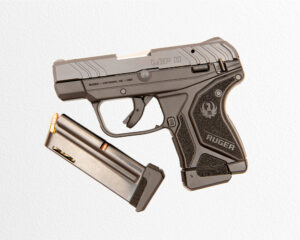
The LCP 2 incorporates an improved slide stop mechanism with last-round hold-open functionality, a significant upgrade from the original LCP, which lacked this feature. This enhancement provides a clear indication when the magazine is empty and facilitates faster reloads. The magazine release is positioned for thumb activation, though the pistol’s compact dimensions mean that shooters with smaller hands may need to adjust their grip slightly to reach it.
Practical Implications:
The trigger system preference often comes down to individual shooting experience and training. Shooters accustomed to striker-fired pistols will find the Glock 42 immediately familiar, while those preferring single-action triggers will appreciate the LCP 2’s crisp break. Both safety systems provide adequate protection while maintaining simplicity of operation, a critical consideration for defensive firearms that must function reliably under extreme stress.
Ruger LCP 2 vs Glock 42: Which Is The Superior Pocket Pistol?
Terry Gun Store encourages prospective buyers to test-fire both pistols when possible to determine which trigger system and control layout feels most intuitive and comfortable for their shooting style.
Performance Comparison: Range Testing & Real-World Applications
Understanding how these pistols perform in practical shooting scenarios provides essential insight beyond mere specifications.
Accuracy and Shootability
Glock 42 Performance:
The Glock 42’s slightly longer barrel (3.25 inches vs. 2.75 inches) and longer sight radius theoretically provide marginal accuracy advantages, particularly at extended distances. In practical testing, the G42 consistently delivers acceptable accuracy for defensive purposes, with most shooters achieving 2-3 inch groups at 7 yards from a supported position.
The pistol’s slightly larger grip surface area and additional weight (13.76 oz vs. 10.6 oz) help mitigate felt recoil, making it somewhat more comfortable to shoot during extended range sessions. The striker-fired trigger’s consistent pull weight and predictable break facilitate accurate shot placement once the shooter becomes accustomed to its characteristics.
Ruger LCP 2 Performance:
The LCP 2’s shorter barrel and lighter weight result in slightly snappier recoil compared to the G42, though the .380 ACP cartridge remains manageable even in this lightweight platform. The improved trigger significantly enhances accuracy potential compared to the original LCP, with most shooters achieving 3-4 inch groups at 7 yards, impressive performance for such a compact pistol.
The single-action trigger’s clean break and short reset facilitate rapid, accurate follow-up shots, partially offsetting the challenges posed by the pistol’s compact dimensions and lighter weight. Shooters with proper technique can achieve surprisingly good accuracy with the LCP 2, though it demands more attention to fundamentals than larger pistols.
Recoil Management
Both pistols chamber the relatively mild .380 ACP cartridge, which produces manageable recoil even in these lightweight platforms. However, the Glock 42’s additional weight and slightly larger grip provide modest advantages in recoil management, particularly for shooters with less experience or those sensitive to recoil.
The LCP 2’s lighter weight means more felt recoil is transmitted to the shooter’s hand, though proper grip technique largely mitigates this consideration. Neither pistol is punishing to shoot, and both are suitable for extended practice sessions, though the G42 may prove slightly more comfortable during high-volume training.
Reliability and Function
Both the Glock 42 and Ruger LCP 2 have established strong reputations for reliability, functioning consistently with quality defensive ammunition. Glock’s reputation for absolute reliability is well-earned, and the G42 maintains this standard despite its compact dimensions. The LCP 2 similarly demonstrates excellent reliability, representing significant improvements over early production original LCP models that occasionally experienced issues.
Both pistols benefit from regular cleaning and lubrication, though they’ll generally function adequately even when somewhat neglected, an important consideration for firearms that may spend extended periods in concealment holsters accumulating lint and debris.
Concealment and Carry Comfort
The LCP 2’s smaller dimensions and lighter weight provide meaningful advantages for deep concealment and all-day carry comfort. It virtually disappears in pocket holsters, ankle holsters, or appendix carry positions, making it ideal for situations demanding maximum discretion or minimal printing through clothing.
The Glock 42, while still highly concealable, presents a slightly larger profile that may be more noticeable in extremely tight clothing or minimal carry positions. However, its additional size provides a more substantial grip that some shooters find more confidence-inspiring and easier to control under stress.
At Terry Gun Store, we recognize that both pistols excel in their intended role as ultra-compact defensive firearms, with the optimal choice depending on whether you prioritize absolute minimum dimensions (LCP 2) or slightly enhanced shootability (G42).
Reliability & Maintenance Considerations
Long-term reliability and maintenance requirements significantly impact the practical utility of defensive firearms.
Glock 42 Reliability:
Glock pistols have earned legendary status for reliability, and the G42 upholds this reputation admirably. The pistol functions reliably with a wide variety of ammunition types, from budget practice rounds to premium defensive loads. The Tenifer-coated slide resists corrosion exceptionally well, even in humid environments or when exposed to perspiration during concealed carry.
Maintenance requirements are minimal; Glock recommends basic cleaning and lubrication after each range session, though the pistol will typically function reliably even when somewhat neglected. The simple design with relatively few parts means there’s less to potentially malfunction, and replacement parts are widely available should they ever be needed.
Ruger LCP 2 Reliability:
The LCP 2 has demonstrated excellent reliability in testing and real-world use, representing meaningful improvements over early production original LCP models. The pistol functions consistently with quality ammunition, though some users report occasional issues with certain bullet profiles or extremely light target loads.
The alloy steel slide with blued finish requires slightly more attention to corrosion prevention than the Glock’s Tenifer coating, particularly in humid environments or during extended carry periods where perspiration exposure is likely. Regular application of quality gun oil to external metal surfaces helps prevent corrosion and maintains the pistol’s appearance.
Maintenance is straightforward, with field stripping accomplished easily for routine cleaning and lubrication. Ruger’s customer service has earned positive reviews, and the company stands behind its products with comprehensive warranties.
Long-Term Durability:
Both pistols are designed for extended service life with proper maintenance. The Glock 42’s Tenifer-coated steel slide and polymer frame are virtually indestructible under normal use, with many Glock pistols remaining functional after tens of thousands of rounds. The LCP 2’s construction is similarly durable, though the blued finish may show wear more readily than the Glock’s coating.
Neither pistol requires specialized tools or gunsmithing knowledge for routine maintenance, making them suitable for shooters of all experience levels. Replacement parts, magazines, and accessories are readily available for both platforms through Terry Gun Store and other retailers.
Pricing & Value Assessment
Cost considerations extend beyond initial purchase price to include ammunition, accessories, and long-term ownership expenses.
Initial Purchase Price:
The Ruger LCP 2 carries a manufacturer’s suggested retail price of $419, while the Glock 42 is priced at $469, a difference of $50. Actual street prices typically run somewhat below MSRP, with both pistols frequently available in the $350-400 range depending on market conditions and retailer pricing.
This modest price difference means that cost alone shouldn’t be the determining factor in your decision. Both pistols represent excellent value in the subcompact defensive pistol category, offering reliable performance at accessible price points.
Ammunition Costs:
Both pistols chamber the .380 ACP cartridge, which typically costs slightly more than 9mm ammunition but remains reasonably affordable for regular practice. Quality defensive ammunition from manufacturers like Federal HST, Hornady Critical Defense, or Speer Gold Dot typically runs $20-30 per box of 20 rounds, while practice ammunition can be found for $15-25 per box of 50 rounds.
Accessory Availability and Costs:
The Glock 42 benefits from Glock’s massive aftermarket support, with countless holster options, sight upgrades, magazine extensions, grip enhancements, and other accessories readily available. This extensive aftermarket means you can customize the pistol extensively to suit your preferences.
The Ruger LCP 2 similarly enjoys strong aftermarket support, though not quite as extensive as Glock’s. Holsters, sights, and other essential accessories are widely available from quality manufacturers at reasonable prices.
Total Cost of Ownership:
When considering the total cost of ownership, including the pistol, quality holster, spare magazines, defensive ammunition, and practice ammunition for initial training, expect to invest approximately $600-700 for either platform, a reasonable investment for a reliable defensive firearm.
Terry Gun Store offers competitive pricing on both pistols, along with all necessary accessories, allowing you to outfit yourself completely for concealed carry in a single transaction.
FAQ: Glock 42 vs LCP 2
Is a 9mm Better Than a .380 for Concealed Carry?
The debate surrounding .380 ACP versus 9mm for concealed carry applications generates passionate discussion within the firearms community, with valid arguments supporting both positions.
The Case for 9mm:
Proponents of 9mm correctly note that this cartridge delivers superior ballistic performance compared to .380 ACP, with greater muzzle energy, deeper penetration, and more consistent expansion with quality defensive ammunition. The 9mm’s superior performance provides a larger margin for error and a greater likelihood of rapidly incapacitating a threat. Additionally, 9mm ammunition is typically less expensive and more widely available than .380 ACP, facilitating more affordable practice.
The Case for .380 ACP:
Advocates for .380 ACP emphasize that this cartridge has served effectively in defensive roles for over a century, with countless documented instances of successful defensive use. While the .380 ACP certainly doesn’t match 9mm’s ballistic performance, it delivers adequate penetration and expansion with modern defensive ammunition to reliably stop threats at typical defensive distances.
More importantly, the .380 ACP’s reduced dimensions allow for significantly smaller pistols that are far easier to carry comfortably and conceal effectively. The fundamental principle of defensive firearms is that “the best gun is the one you have with you”, and a .380 ACP pistol that you’ll actually carry consistently is infinitely more valuable than a 9mm pistol that remains at home because it’s too large or uncomfortable to carry.
The Truth:
The .380 ACP represents the generally accepted minimum caliber for defensive applications, providing adequate stopping power when loaded with quality defensive ammunition while enabling truly compact pistol designs. While it’s accurate that .380 ACP doesn’t match the energy or long-distance accuracy of larger calibers like 9mm or .45 ACP, it delivers more than sufficient lethality for typical defensive scenarios occurring at 3-7 yards.
This combination of adequate terminal performance and exceptional concealability makes .380 ACP pistols popular choices among concealed carriers and law enforcement personnel for everyday carry or as backup weapons. The cartridge’s mild recoil also makes these pistols more shootable for individuals with limited hand strength or those sensitive to recoil.
For a comprehensive analysis of defensive caliber selection, Terry Gun Store offers detailed resources examining the best calibers for self-defense applications, helping you make informed decisions based on your specific circumstances and requirements.
Is the Glock 42 Good for Pocket Carry?
While most discussions of pocket carry focus on micro-compact pistols with barrel lengths of 3 inches or less, the subcompact Glock 42 remains an excellent choice for this carry method despite slightly exceeding traditional pocket pistol dimensions.
Dimensional Considerations:
The G42’s 3.25-inch barrel length places it marginally above the conventional pocket pistol threshold, and its overall length of 5.94 inches makes it slightly longer than typical pocket guns. However, these modest dimensional increases are offset by the pistol’s slim 0.98-inch width and relatively light 13.76-ounce weight, which remain well within acceptable parameters for pocket carry.
Practical Pocket Carry Performance:
In real-world pocket carry applications, the Glock 42 performs admirably when paired with a quality pocket holster that breaks up the pistol’s outline and protects the trigger. The pistol disappears effectively in cargo pants pockets, jacket pockets, or the pockets of looser-fitting casual pants. While it may print slightly more than smaller options like the LCP 2 in extremely tight or thin pockets, it remains surprisingly concealable for its size.
The G42’s slightly larger dimensions actually provide certain advantages for pocket carry, including a more substantial grip that facilitates a secure purchase during the draw stroke and better control during firing. The additional barrel length also provides marginally improved ballistic performance compared to shorter-barreled alternatives.
Holster Selection:
Successful pocket carry with the Glock 42 requires a quality pocket holster specifically designed for this pistol. The holster should completely cover the trigger guard, provide adequate rigidity to prevent printing, and allow the pistol to be drawn cleanly while the holster remains in the pocket. Terry Gun Store stocks premium pocket holsters from reputable manufacturers that meet these requirements.
For comprehensive guidance on pocket pistol selection and carry methodology, including detailed recommendations across various size categories, explore Terry Gun Store’s curated selection of the Best Pocket Pistols for Concealed Carry.
Which Has Better Aftermarket Support?
The Glock 42 enjoys superior aftermarket support compared to the Ruger LCP 2, reflecting Glock’s dominant market position and the massive ecosystem of accessories, parts, and upgrades available for Glock pistols.
Glock aftermarket options include countless holster designs, night sights, and upgraded sight systems, extended magazine releases, grip enhancements, trigger upgrades, magazine extensions, and virtually any other accessory imaginable. This extensive support means you can customize the G42 extensively to suit your specific preferences and requirements.
The Ruger LCP 2 benefits from solid aftermarket support with quality holsters, sights, and essential accessories readily available, though the selection isn’t as comprehensive as what’s available for Glock pistols. For most users, the available LCP 2 accessories are more than adequate for creating an effective carry system.
Can I Install a Red Dot Sight on Either Pistol?
Neither the Glock 42 nor the Ruger LCP 2 comes factory-equipped with provisions for mounting red dot sights or other optics. However, aftermarket slide milling services can add optics mounting plates to either pistol, allowing installation of micro red dot sights.
This modification typically costs $150-300, depending on the specific optics footprint and whether refinishing is required. However, adding an optic to these ultra-compact pistols somewhat defeats their primary purpose, maximum concealability in minimum dimensions. The added height and weight of even micro red dots can compromise concealment and comfort.
For most users, the factory iron sights on either pistol provide adequate precision for defensive applications at typical engagement distances. If you’re interested in optics-equipped pistols, consider larger models specifically designed with optics mounting from the factory.
Which Pistol is More Accurate?
The Glock 42’s slightly longer barrel (3.25″ vs. 2.75″) and longer sight radius provide theoretical accuracy advantages, particularly at extended distances beyond typical defensive ranges. In practical testing, both pistols deliver acceptable accuracy for defensive purposes, with the G42 showing marginal advantages in precision shooting.
However, the LCP 2’s superior trigger partially offsets the G42’s dimensional advantages, with many shooters finding the LCP 2’s crisp single-action trigger easier to shoot accurately than the G42’s striker-fired trigger. Ultimately, the accuracy differences between these pistols are modest, and shooter skill and practice have far greater impact on practical accuracy than the minor differences between these platforms.
How Many Rounds Should I Carry?
Both pistols ship with 6-round magazines, providing 6+1 capacity (six in the magazine plus one in the chamber). This capacity is adequate for most defensive scenarios, with FBI statistics indicating that most defensive encounters involve 2-3 shots fired.
However, carrying at least one spare magazine is strongly recommended, providing not only additional ammunition but also a solution should the primary magazine malfunction or be lost during an encounter. Extended magazines offering 7-8 round capacity are available for both pistols, though they compromise concealability by extending below the grip.
Terry Gun Store recommends carrying the pistol with a round chambered (6+1) plus at least one spare magazine, providing adequate ammunition for realistic defensive scenarios while maintaining reasonable concealability.
Final Verdict: Which Pocket Pistol is Right For You?
After a comprehensive analysis of the Ruger LCP 2 vs the Glock 42, it’s evident that declaring one objectively superior to the other would be misleading. Both pistols represent excellent choices in the subcompact defensive pistol category, each with distinct characteristics that may render one more suitable for your specific requirements.
Choose the Ruger LCP 2 If:
- Maximum concealability is your top priority: The LCP 2’s smaller dimensions and lighter weight make it virtually undetectable in pocket carry, ankle carry, or other deep concealment positions.
- You prefer single-action triggers: The LCP 2’s short, crisp trigger provides a clean break that many shooters find easier to shoot accurately than striker-fired triggers.
- Weight is a critical concern: At just 10.6 ounces, the LCP 2 is exceptionally light for all-day carry comfort.
- Budget is a consideration: The LCP 2’s lower MSRP provides modest savings, though street prices for both pistols are often similar.
- You have smaller hands: The LCP 2’s compact grip may be more comfortable for shooters with smaller hands.
Choose the Glock 42 If:
- You prefer striker-fired triggers: If you’re accustomed to Glock triggers or prefer the consistency of striker-fired systems, the G42 will feel immediately familiar.
- Shootability is paramount: The G42’s slightly larger dimensions, longer sight radius, and additional weight provide marginal advantages in accuracy and recoil management.
- You value extensive aftermarket support: Glock’s massive ecosystem of accessories, parts, and upgrades allows extensive customization.
- You prioritize legendary reliability: While both pistols are reliable, Glock’s reputation for absolute dependability is unmatched.
- You have larger hands: The G42’s slightly larger grip provides more surface area for a secure purchase.
The Bottom Line:
Both the Ruger LCP 2 and Glock 42 are outstanding subcompact pistols chambered in .380 ACP with 6+1 capacity and comprehensive internal safety mechanisms. The LCP 2 prioritizes absolute minimum dimensions and weight, while the G42 offers slightly enhanced shootability in a still-highly-concealable package.
Your optimal choice ultimately depends on your individual priorities, hand size, carry preferences, and shooting experience. If possible, handle and test-fire both pistols before making your decision—the subjective feel and shooting experience often prove more influential than objective specifications.
Complete Your Carry System at Terry Gun Store:
Regardless of which pistol you select, Terry Gun Store offers everything necessary to create an effective concealed carry system:
- Premium Holsters: Browse our extensive selection of holsters organized by gun model, featuring custom-fit Kydex holsters specifically designed for the Glock 42 and Ruger LCP 2. Our holsters provide secure retention, comfortable carry, and rapid access when needed.
- Interactive Comparison Tools: Utilize our innovative comparison tool to view holsters side-by-side, filtering by specific features to identify the perfect holster for your carry style and preferences.
- Expert Guidance: Our knowledgeable staff can provide personalized recommendations based on your specific requirements, body type, and carry preferences.
- Comprehensive Resources: Explore our extensive Resources Page featuring gear recommendations, concealed carry guides, training resources, and exclusive content designed to elevate your carry system and defensive capabilities.
- Quality Accessories: From spare magazines and magazine carriers to defensive ammunition and cleaning supplies, Terry Gun Store stocks everything needed to maintain and deploy your defensive pistol effectively.
Visit Terry Gun Store Today:
Whether you’re a first-time gun owner establishing your initial concealed carry system or an experienced shooter adding to your collection, Terry Gun Store provides the products, expertise, and support necessary to make informed decisions and carry confidently.
Visit us online or at our physical location to explore our complete selection of firearms, holsters, accessories, and training resources. Our commitment to customer service, competitive pricing, and comprehensive product knowledge makes Terry Gun Store your trusted partner for all concealed carry needs.
Your safety and confidence matter. Choose wisely. Carry confidently. Trust Terry Gun Store.