
Glock 42 vs Ruger LCP: The Ultimate Comprehensive Comparison Guide for Concealed Carry Excellence
Table of Contents
- Introduction: Choosing Your Ideal Concealed Carry Companion
- Glock 42: Engineering Excellence in Subcompact Design
- Ruger LCP: Micro-Compact Innovation Redefined
- Technical Specifications: A Detailed Comparative Analysis
- Dimensional Comparison: Size, Weight, and Capacity Considerations
- Construction and Materials: Frame, Slide, and Barrel Engineering
- Sight Systems and Optics Compatibility: Aiming for Precision
- Operational Controls: Trigger Mechanisms and Safety Features
- Frequently Asked Questions: Expert Insights
- Making Your Decision: Which Pistol Suits Your Needs?
- Conclusion: Your Path to Confident Concealed Carry
Introduction: Choosing Your Ideal Concealed Carry Companion
When you’re in the market for an exceptional compact pistol designed specifically for concealed carry applications, it’s entirely understandable that both the Glock 42 and the Ruger LCP have captured your attention. These two remarkable firearms represent the pinnacle of lightweight, dependable handgun engineering from manufacturers with sterling reputations in the firearms industry.
At Terry Lee Guns Store, we understand that selecting the perfect concealed carry weapon is a deeply personal decision that requires careful consideration of numerous factors. Both the Glock 42 and Ruger LCP have earned their places as top contenders in the concealed carry marketplace, each offering distinct advantages that cater to different shooter preferences and carry requirements.
But what specific characteristics and engineering features distinguish each of these exceptional models from one another?
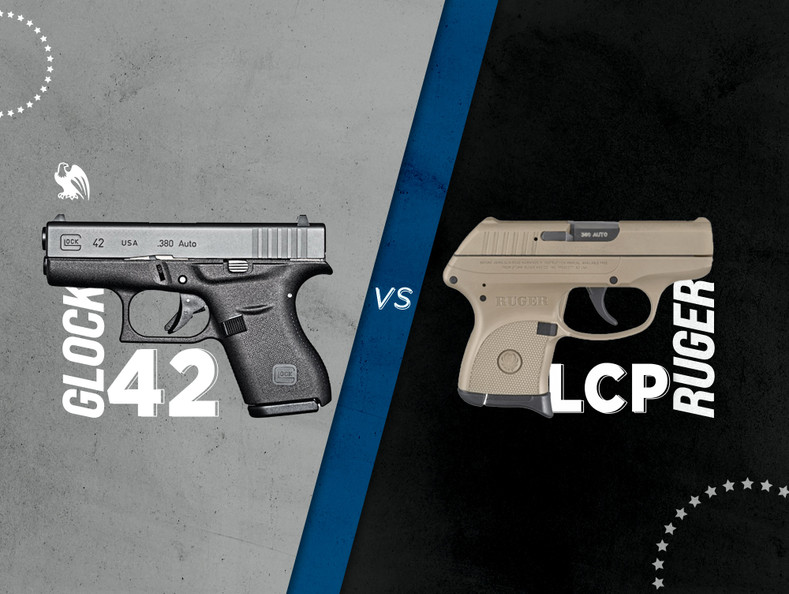
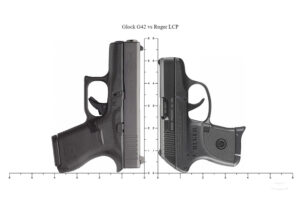
When conducting a thorough comparison between the Glock 42 vs LCP, you’ll immediately notice numerous similarities that both firearms share. Each pistol features a standard 6-round magazine capacity, both are chambered in the proven .380 Auto cartridge, and each comes equipped with factory-installed sight systems. However, the primary distinctions lie in their trigger action mechanisms and overall dimensional profiles. The subcompact Glock 42 utilizes a striker-fired operating system and presents slightly larger dimensions compared to the hammer-fired, micro-compact Ruger LCP.
Throughout this comprehensive guide, we’ll meticulously examine the differences, similarities, advantages, and potential limitations of these two outstanding firearms to help you make an informed decision that aligns perfectly with your concealed carry needs and personal preferences.
Glock 42: Engineering Excellence in Subcompact Design
For enthusiasts of the Glock platform who desire the most compact option available in the manufacturer’s extensive lineup, the Glock 42 represents an exceptional choice that’s genuinely difficult to surpass. Its ultra-compact dimensions combined with a remarkably smooth shooting experience have established a formidable reputation within the concealed carry community.
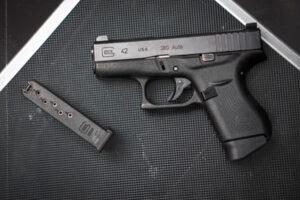
Chambered in the reliable .380 Auto cartridge, this striker-fired pistol showcases a durable black polymer frame construction paired with a Tenifer-coated ordnance-grade steel slide that provides exceptional corrosion resistance and surface hardness. Consistent with most Glock firearms, the G42 incorporates the renowned Safe Action trigger system, which comprises three independent mechanical safety mechanisms that work in concert to prevent accidental discharge. The standard magazine configuration holds 6 rounds of .380 Auto ammunition, though extended capacity magazines are readily available for those seeking additional firepower.
Measuring less than one inch in width, the Glock 42 stands as one of the slimmest models in Glock’s entire product catalog. This makes it an outstanding option for deep concealment applications in virtually any carry position, whether you prefer appendix carry, strong-side hip carry, or alternative concealment methods.
At Terry Lee Guns Store, we maintain an extensive inventory of Glock 42 pistols and complementary accessories. You can explore our complete selection of these exceptional firearms, and we also offer a comprehensive range of premium Glock 42 holsters specifically designed to maximize comfort and concealment.
Ruger LCP: Micro-Compact Innovation Redefined
When Ruger introduced the LCP .380 Auto to the concealed carry marketplace in 2008, it rapidly achieved widespread popularity and acclaim due to its exceptionally lightweight construction and remarkably compact design profile. This innovative pistol addressed a significant gap in the market for truly pocket-sized defensive firearms.
This centerfire pistol features robust construction with a through-hardened alloy steel slide paired with a glass-filled nylon grip frame that provides both durability and weight reduction. Chambered in .380 Auto, it arrives from the factory with a standard 6-round magazine, though extended capacity magazines are available through aftermarket sources to increase ammunition capacity for those who prioritize additional rounds.
The LCP incorporates a comfortable textured grip surface that enhances control and reduces slippage during firing, fixed front and rear sight systems, a recessed hammer design that eliminates snagging concerns, and a finger grip extension floorplate that can be installed to accommodate shooters with larger hands or those who prefer a fuller grip.
Overall, the Ruger LCP has established itself as an exceptionally popular choice for concealed carry applications, primarily due to its featherweight design characteristics and budget-friendly price point, which makes defensive firearms accessible to a broader audience.
At Terry Lee Guns Store, we’re proud to offer an extensive selection of Ruger LCP pistols along with a comprehensive range of premium Ruger LCP holsters engineered for optimal concealment and rapid accessibility.
Glock 42 vs Ruger LCP: The Ultimate Comprehensive Comparison Guide for Concealed Carry Excellence
Technical Specifications: A Detailed Comparative Analysis
| Specification | Glock 42 | Ruger LCP |
|---|---|---|
| Caliber | .380 Auto | .380 Auto |
| Classification | Subcompact | Micro-Compact |
| Overall Height | 4.13 inches | 3.6 inches |
| Overall Length | 5.94 inches | 5.16 inches |
| Barrel Length | 3.25 inches | 2.75 inches |
| Overall Width | 0.98 inches | 0.82 inches |
| Unloaded Weight | 13.76 ounces | 9.6 ounces |
| Standard Capacity | 6+1 rounds | 6+1 rounds |
| Manufacturer’s Suggested Retail Price | $469 | $259 |
Dimensional Comparison: Size, Weight, and Capacity Considerations
The dimensional comparison between the Glock 42 vs Ruger LCP presents a relatively straightforward analysis. Both firearms are chambered in .380 Auto and feature a standard 6-round magazine capacity with extended magazine options available. However, the similarities largely conclude at this point.
The subcompact Glock 42 presents noticeably larger dimensions and greater weight compared to the micro-compact Ruger LCP. The G42 measures 4.13 inches in height, 5.94 inches in overall length, and 0.98 inches in width, featuring a barrel length of 3.25 inches and an unloaded weight of 13.76 ounces. In contrast, the LCP measures only 3.6 inches in height, 5.16 inches in overall length, and 0.82 inches in width, with an impressively light unloaded weight of just 9.6 ounces.
These dimensional differences translate into practical considerations for concealed carry. The Ruger LCP’s smaller footprint and lighter weight make it exceptionally well-suited for pocket carry, ankle holsters, or situations where absolute minimal printing is paramount. The Glock 42, while still highly concealable, offers a slightly larger grip surface that many shooters find provides better control and more comfortable shooting characteristics, particularly during extended range sessions.
At Terry Lee Guns Store, we encourage customers to handle both firearms whenever possible to determine which dimensional profile best suits their individual hand size, carry preferences, and concealment requirements.
Construction and Materials: Frame, Slide, and Barrel Engineering
Glock 42 Construction
The Glock 42 showcases engineering excellence through its subcompact black polymer frame construction, which incorporates an integrated beavertail design that facilitates a high and secure grip while simultaneously protecting the shooter’s hand from slide bite. This ergonomic consideration enhances both comfort and control during firing sequences.
The slide assembly features Tenifer coating applied to ordnance-grade steel, providing exceptional surface hardness that resists wear and corrosion even under demanding conditions. The slide incorporates rear serrations that facilitate positive manipulation for press checks and slide racking operations.
Ruger LCP Construction
The Ruger LCP utilizes high-performance glass-filled nylon for its textured grip micro-compact frame, which delivers impressive strength-to-weight ratios while maintaining the pistol’s remarkably light overall weight. The frame includes a finger grip extension plate that can be added to the magazine to improve comfort and enhance grip purchase, particularly beneficial for shooters with larger hands.
The barrel features black oxide coating applied to alloy steel, providing corrosion resistance and durability. The slide is manufactured from through-hardened steel and incorporates rear slide serrations for reliable manipulation even with wet or gloved hands.
Both firearms demonstrate thoughtful engineering approaches that balance durability, weight considerations, and manufacturing efficiency while maintaining the reliability standards expected from their respective manufacturers.
Sight Systems and Optics Compatibility: Aiming for Precision
Both the Ruger LCP and Glock 42 arrive from the factory equipped with standard sight systems, though their implementations differ in specific details.
Ruger LCP Sights
The LCP features low-profile fixed front and rear sights that are integral to the slide assembly. This design approach minimizes snagging potential during draw operations from concealment while providing an adequate sight picture for defensive shooting distances. The low-profile nature of these sights prioritizes concealment and snag-free operation over precision target shooting capabilities.
Glock 42 Sights
The Glock 42 incorporates Glock’s standard polymer sight system, which provides a more pronounced sight picture compared to the LCP’s ultra-low-profile sights. While still designed with concealed carry in mind, these sights offer slightly better visibility and target acquisition capabilities.
Optics Compatibility
Neither pistol arrives from the factory as optics-ready, meaning neither features a milled slide designed to accept micro red dot sights without modification. However, aftermarket slide milling services are available for shooters who wish to add miniature red dot optics to either platform.
At Terry Lee Guns Store, we can provide guidance on aftermarket sight upgrade options and connect you with reputable gunsmiths who specialize in slide modifications, should you desire enhanced sight systems or optics mounting capabilities.
Operational Controls: Trigger Mechanisms and Safety Features
![Rear view of Glock 42 showing controls]
Trigger Systems: A Critical Distinction
The trigger mechanism represents one of the most significant operational differences between the Glock 42 and Ruger LCP, and this distinction profoundly affects the shooting experience.
Ruger LCP Trigger
The LCP employs a single-action trigger mechanism that, in practical operation, feels somewhat similar to a double-action-only (DAO) system. The trigger pull is relatively long with a somewhat heavy pull weight, which serves as an additional safety measure but requires deliberate trigger manipulation. Some shooters find that this trigger system requires more practice to master for accurate shot placement, while others appreciate the additional safety margin it provides.
Glock 42 vs Ruger LCP: The Ultimate Comprehensive Comparison Guide for Concealed Carry Excellence
Glock 42 Trigger
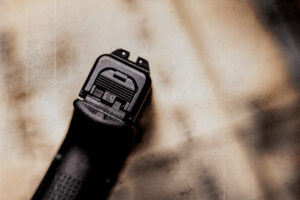
The G42 utilizes Glock’s striker-fired trigger system, which features a relatively light take-up phase followed by a rolling break that many shooters find more conducive to accurate shooting. The trigger reset is short and tactile, facilitating rapid follow-up shots. The striker-fired mechanism generally provides a more consistent trigger pull compared to traditional hammer-fired designs.
Safety Mechanisms
Ruger LCP Safety Features
The Ruger LCP does not incorporate a manual thumb safety, relying instead on its trigger mechanism and internal safety features to prevent accidental discharge. The recessed hammer design eliminates external hammer snagging concerns while maintaining the hammer-fired operating principle.
Glock 42 Safety Features
Similarly, the Glock 42 lacks a manual thumb safety. However, it incorporates Glock’s renowned Safe Action System, which consists of three independent mechanical safety mechanisms: the trigger safety, firing pin safety, and drop safety. These safeties automatically disengage sequentially as the trigger is pulled and automatically re-engage when the trigger is released, providing comprehensive protection against accidental discharge while maintaining simplicity of operation.
At Terry Lee Guns Store, we emphasize that regardless of which firearm you select, proper training in safe handling, storage, and operation remains paramount. We encourage all customers to seek professional instruction and practice regularly to develop proficiency with their chosen defensive firearm.
Frequently Asked Questions: Expert Insights
Is Ruger as Reliable as Glock?
This question frequently arises among shooters who are comparing these two manufacturers, and it deserves a thoughtful, nuanced response.
Some individuals operate under the misconception that because Ruger positions itself as a more budget-friendly manufacturer with competitive pricing, its firearms must necessarily be of inferior quality compared to premium brands like Glock, which has cultivated an exceptional reputation for reliability and durability over decades.
However, this assumption does not accurately reflect reality. Both Glock and Ruger are trusted, reputable firearms manufacturers with long histories of producing functional, reliable firearms that perform admirably in defensive applications. Ruger’s more accessible pricing structure reflects different manufacturing approaches, economies of scale, and business models rather than compromised quality or reliability.
When choosing between these two manufacturers, the decision ultimately comes down to your personal preferences regarding ergonomics, trigger characteristics, aesthetic preferences, and budget considerations. Regardless of which brand you select, provided you maintain your firearm properly with regular cleaning and appropriate lubrication, you’ll possess a dependable defensive tool that you can confidently rely upon for personal protection.
At Terry Lee Guns Store, we’ve observed excellent reliability from both manufacturers across thousands of rounds fired by our customers and staff. We stand behind both brands and encourage you to base your decision on how each firearm feels in your hand and performs for your specific needs rather than brand loyalty alone.
Is .380 Auto Effective for Self-Defense Applications?
The .380 ACP (Automatic Colt Pistol) cartridge ranks among the most popular calibers for smaller handguns designed for concealed carry. However, some individuals question whether this caliber provides adequate stopping power for defensive scenarios.
The .380 ACP round is widely considered the minimum viable caliber for concealed carry applications and has proven itself as an effective choice for self-defense for well over a century. Countless defensive encounters have demonstrated that properly-placed .380 Auto rounds deliver sufficient stopping power to neutralize threats.
While it’s accurate that the .380 ACP does not generate the same kinetic energy or maintain long-distance accuracy as larger calibers such as 9mm Luger or .45 ACP, it absolutely possesses more than adequate stopping power to be lethal when shots are properly placed in vital areas. Modern defensive ammunition in .380 Auto, featuring advanced hollow-point bullet designs, has significantly enhanced the cartridge’s terminal ballistic performance.
This effective stopping power, combined with the exceptionally compact dimensions of most .380 pistols, makes them a popular and sufficient choice among concealed carriers and law enforcement personnel alike for everyday carry applications or as backup weapons to supplement primary duty firearms.
The key consideration is that shot placement remains far more important than caliber selection. A well-placed .380 Auto round will prove far more effective than a poorly-placed round from a larger caliber. The compact nature of .380 pistols means you’re more likely to actually carry the firearm consistently, which is infinitely more valuable than leaving a larger, more powerful pistol at home because it’s uncomfortable or inconvenient to carry.
For those interested in exploring this topic more comprehensively, Terry Lee Guns Store offers detailed resources and expert consultation on caliber selection for self-defense applications, taking into account your specific circumstances, physical capabilities, and carry requirements.
What Does LCP Stand For?
The Ruger LCP family has evolved considerably beyond the original LCP model introduced in 2008, and now encompasses multiple variants, including the original Ruger LCP, the improved LCP II with enhanced trigger and sights, and the higher-capacity LCP MAX. But what does the LCP designation actually mean?
According to Ruger’s official documentation, LCP stands for “Lightweight Compact Pistol,” and the original model was specifically engineered to serve as a backup weapon for law enforcement officers and as a primary concealed carry option for armed citizens seeking maximum concealability.
Glock 42 vs Ruger LCP: The Ultimate Comprehensive Comparison Guide for Concealed Carry Excellence
This naming convention accurately reflects the pistol’s design philosophy: creating the lightest, most compact defensive pistol possible while maintaining reliability and adequate stopping power. The LCP designation has become synonymous with pocket-sized defensive firearms, and the platform’s success has inspired numerous competitors in the micro-compact pistol category.
How Do Extended Magazines Affect Concealment and Performance?
Both the Glock 42 and Ruger LCP offer extended magazine options that increase capacity beyond the standard 6 rounds. These extended magazines typically add 1-2 additional rounds while providing a longer grip surface.
The advantages of extended magazines include increased ammunition capacity and improved grip purchase, which can enhance control and shooting comfort. However, the extended grip length can compromise concealability, particularly for pocket carry or when wearing form-fitting clothing.
At Terry Lee Guns Store, we recommend carrying your firearm with extended magazines during range practice to develop proficiency, then evaluating whether the concealment trade-off is acceptable for your specific carry method and clothing choices.
What Holster Types Work Best for These Pistols?
Both the Glock 42 and Ruger LCP excel in various carry positions due to their compact dimensions:
Inside-the-Waistband (IWB) Holsters: Excellent for both pistols, providing deep concealment with proper belt support.
Pocket Holsters: The Ruger LCP’s smaller size makes it particularly well-suited for pocket carry, though the Glock 42 can work in larger pockets.
Appendix Carry: Both firearms work exceptionally well in the appendix position due to their slim profiles.
Ankle Holsters: The LCP’s lighter weight makes it more comfortable for ankle carry during extended periods.
Terry Lee Guns Store offers premium Kydex holsters custom-molded for both firearms, ensuring a perfect fit, reliable retention, and comfortable all-day carry.
Making Your Decision: Which Pistol Suits Your Needs?
If you’re attempting to choose between the Glock 42 vs the LCP, several primary differences warrant careful consideration as you evaluate which firearm best aligns with your specific requirements.
Size and Weight Considerations
The first major distinction involves overall dimensions and weight. While the Glock 42 qualifies as a subcompact pistol with an unloaded weight of 13.76 ounces, the Ruger LCP represents a true micro-compact design weighing merely 9.6 ounces. This 4-ounce difference becomes quite noticeable during all-day carry, particularly in pocket carry applications or when using lightweight holster systems.
If absolute minimal size and weight represent your highest priorities, perhaps because you frequently wear lightweight summer clothing, require deep concealment for professional reasons, or desire a backup gun that you’ll barely notice, the Ruger LCP presents compelling advantages.
Conversely, if you prefer a slightly larger grip surface that provides better control during shooting, don’t mind the modest additional weight, and prioritize shooting comfort during practice sessions, the Glock 42 may better serve your needs.
Trigger System Preferences
These firearms feature fundamentally different trigger systems that significantly affect the shooting experience. The Glock 42’s striker-fired mechanism delivers a relatively light, consistent trigger pull with a short reset that many shooters find conducive to accuracy and rapid follow-up shots. The Ruger LCP’s single-action trigger with its longer, heavier pull requires more deliberate manipulation but provides an additional safety margin that some carriers prefer.
Your personal preference regarding trigger characteristics should heavily influence your decision. If possible, we strongly recommend visiting Terry Lee Guns Store to handle both firearms and, ideally, test-fire them at a range to experience these trigger differences firsthand.
Budget Considerations
The Ruger LCP’s manufacturer’s suggested retail price of approximately $259 represents nearly half the Glock 42’s MSRP of around $469. This substantial price difference makes the LCP significantly more accessible for budget-conscious buyers or those purchasing their first defensive firearm.
However, it’s important to consider the total cost of ownership, including holsters, spare magazines, ammunition for practice, and any desired accessories or upgrades. Even with the Glock 42’s higher initial cost, the total investment difference may be less significant than the MSRP comparison suggests.
Intended Carry Method
Your preferred carry method should inform your selection:
- Pocket Carry: The Ruger LCP’s smaller dimensions and lighter weight make it the superior choice for pocket carry in most circumstances.
- IWB or Appendix Carry: Both firearms excel in these positions, with the choice depending more on your size/weight preferences and trigger system preference.
- Backup Gun: The LCP’s minimal size and weight make it exceptional as a backup to a primary defensive firearm.
- Primary Carry Gun: If this will be your only defensive firearm, the Glock 42’s slightly larger size may provide better shootability for practice and proficiency development.
Shooting Experience and Recoil Management
The Glock 42’s additional weight and slightly longer barrel length help mitigate felt recoil compared to the ultra-lightweight LCP. If you’re recoil-sensitive, have hand strength limitations, or plan to practice extensively, the Glock 42 generally provides a more comfortable shooting experience.
The LCP’s lighter weight means more felt recoil is transmitted to your hand, which some shooters find fatiguing during extended practice sessions. However, for the brief duration of a defensive encounter, this difference becomes less significant.
Aftermarket Support and Customization
Glock’s enormous market presence means extensive aftermarket support with countless holster options, sight upgrades, trigger modifications, and accessories available. While the Ruger LCP also enjoys solid aftermarket support, the selection isn’t quite as extensive as what’s available for Glock platforms.
If you enjoy customizing your firearms or anticipate wanting specific accessories, the Glock 42’s broader aftermarket ecosystem may prove advantageous.
Reliability and Track Record
Both firearms have established excellent reliability records with proper maintenance. The Glock 42 benefits from Glock’s legendary reputation for reliability under adverse conditions. The Ruger LCP, despite its budget-friendly pricing, has similarly proven itself reliable across millions of rounds fired by countless owners since 2008.
At Terry Lee Guns Store, we’ve observed that both pistols function reliably when properly maintained and fed quality ammunition. Neither firearm presents reliability concerns that should influence your decision.
Conclusion: Your Path to Confident Concealed Carry
Selecting between the Glock 42 and Ruger LCP ultimately represents a personal decision that should be based on your individual circumstances, preferences, and intended applications rather than any objective declaration of superiority.
The Ruger LCP excels as an ultra-compact, lightweight, budget-friendly option that virtually disappears during concealed carry. Its minimal dimensions make it exceptional for pocket carry, backup gun applications, or situations where absolute concealment takes precedence over all other considerations. The more affordable price point makes defensive firearms accessible to a broader audience, which serves an important role in enabling more citizens to exercise their right to self-defense.
Glock 42 vs Ruger LCP: The Ultimate Comprehensive Comparison Guide for Concealed Carry Excellence
The Glock 42 offers a slightly larger platform that many shooters find more comfortable and controllable during shooting, features Glock’s renowned striker-fired trigger system with its consistent pull and short reset, and benefits from Glock’s legendary reputation for reliability and extensive aftermarket support. For those who don’t require absolute minimal dimensions and prefer enhanced shootability, the G42 represents an excellent choice.
Regardless of which firearm you ultimately select, you can proceed with confidence knowing you’re carrying a reliable, proven, easy-to-conceal defensive tool that performs admirably for everyday carry applications. Both the Glock 42 and Ruger LCP have protected countless individuals and earned their reputations as dependable concealed carry options.
At Terry Lee Guns Store, we’re committed to helping you make an informed decision that aligns perfectly with your needs. We encourage you to visit our location to handle both firearms, discuss your specific requirements with our knowledgeable staff, and ideally test-fire both options if possible. Our team possesses extensive experience with both platforms and can provide personalized guidance based on your hand size, carry preferences, experience level, and budget.
Your Next Steps
Once you’ve selected your ideal concealed carry pistol, Terry Lee Guns Store offers everything you need to build a complete, effective defensive system:
Premium Holsters: Visit our Holsters by Gun Model page to discover custom-fit Kydex holsters specifically engineered for your chosen firearm. Our holsters provide secure retention, comfortable all-day carry, and rapid accessibility when seconds count.
Quality Ammunition: We stock a comprehensive selection of defensive ammunition from trusted manufacturers, including modern hollow-point designs optimized for .380 Auto performance.
Essential Accessories: From spare magazines and magazine extensions to cleaning supplies and storage solutions, we provide everything necessary to maintain and carry your defensive firearm.
Training Resources: Explore our Resources Page for gear recommendations, comprehensive concealed carry guides, training advice, and exclusive content designed to elevate your defensive capabilities and refine your carry system.
Expert Consultation: Our experienced staff is available to answer questions, provide recommendations, and ensure you have the knowledge and equipment necessary for confident, responsible concealed carry.
The decision to carry a defensive firearm represents a serious commitment to personal safety and responsibility. At Terry Lee Guns Store, we’re honored to support you throughout this journey with quality products, expert guidance, and ongoing resources to help you develop and maintain the skills necessary for effective self-defense.
Whether you choose the Glock 42, Ruger LCP, or another firearm entirely, we’re here to ensure you have everything needed to carry confidently and responsibly. Visit us today to begin building your ideal concealed carry system, and remember that the best defensive firearm is the one you’ll actually carry consistently, shoot accurately, and maintain properly.
Your safety and confidence matter to us. Let Terry Lee Guns Store be your trusted partner in concealed carry excellence.